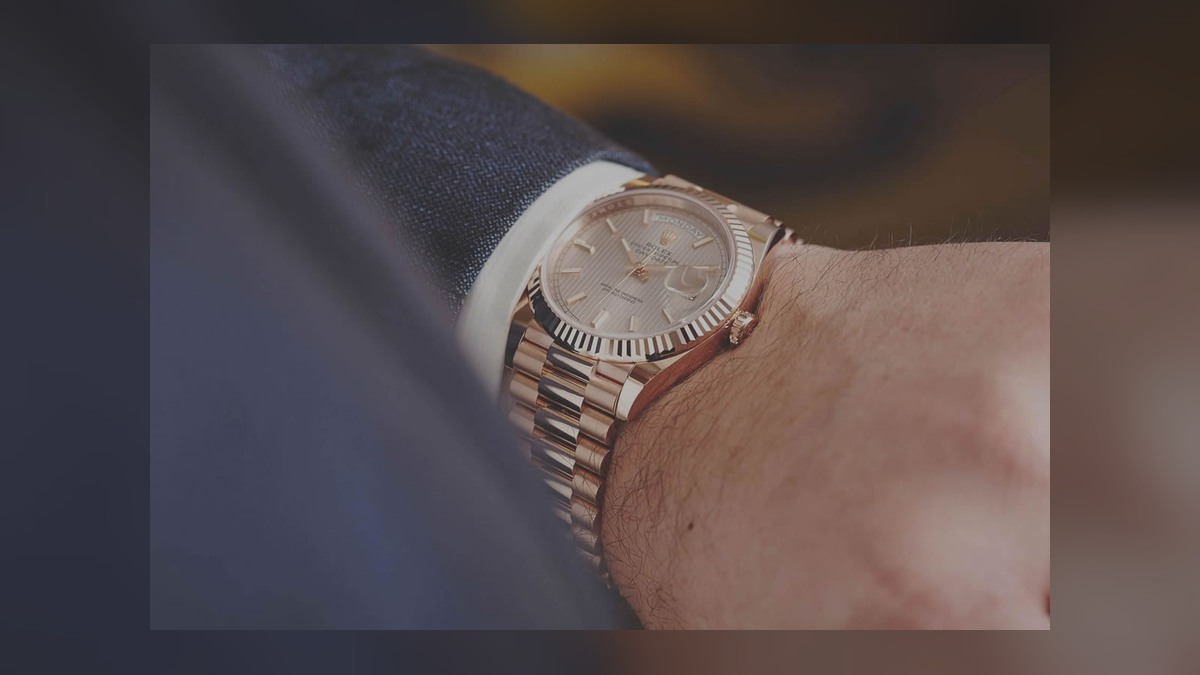
How to Buy a Rolex Day-Date Replica: Detailed QC Guide
A step-by-step buying process built around verifiable evidence: reference choice, actual-watch photos, movement functions, calendar alignment, materials and pressure testing.
A step-by-step buying process built around verifiable evidence: reference choice, actual-watch photos, movement functions, calendar alignment, materials and pressure testing.
Define the model, size, dial and construction you want first. Otherwise a seller can steer the comparison toward whichever grade label is easiest to market.
Editorial review: . Genuine Rolex specifications are used only as a reference baseline; replica construction, materials and water resistance must be verified separately.
Use the genuine Rolex specification only to define the design reference. Then evaluate the replica as its own product. A Day-Date-style watch may visually imitate a precious-metal Rolex while using plated or coated steel, a modified MIYOTA movement and a different water-resistance standard. None of those differences are inherently hidden if the seller explains them accurately.
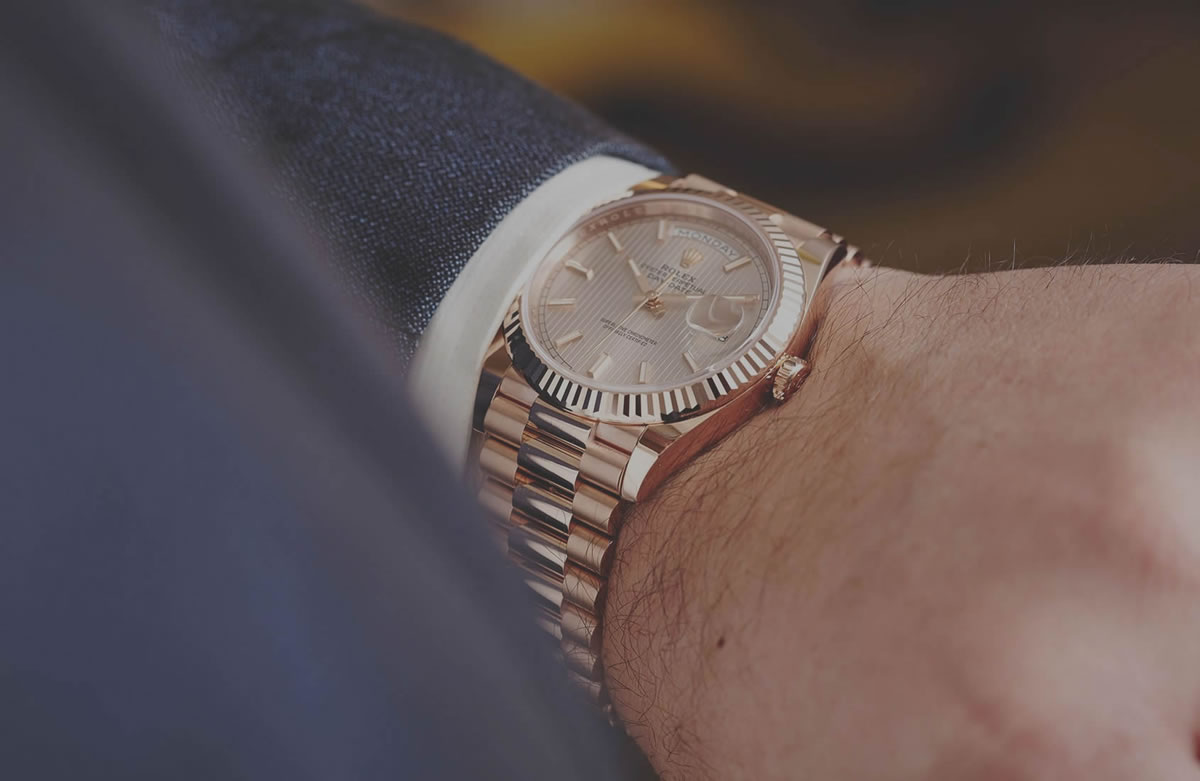
Decide whether the target is 36 mm, Day-Date II 41 mm or Day-Date 40. These are not interchangeable names. Ask for actual diameter and thickness. If the listing uses “Day-Date II 40 mm,” that terminology alone is a reason to request clarification.
Record dial colour, marker style, bezel type, bracelet finish and case colour. This prevents a seller from sending a similar but different configuration and gives you a checklist for QC.
Do not accept “Japanese automatic,” “Swiss movement” or “clone 3255” as a complete specification. Ask for the exact calibre, beat rate, approximate measured power reserve, day/date quick-set method and service options.
If a seller names MIYOTA 8215 or 9015 inside a full Day-Date display, ask how the weekday is added because MIYOTA publishes those bases as date-only. If the seller names 8205, ask how its day mechanism is adapted to the 12 o’clock full-width display.
At minimum request: straight-on dial, side profile, crown side, case back, both bracelet end links, open clasp, movement if accessible, and a neutral-light colour photo. Stock images are useful for choosing a model but cannot prove the alignment or condition of the unit that will ship.
Ask for at least two weekdays and two dates, including a double-digit date. Check centring, baseline height, date/Cyclops alignment and whether printing is consistent. A seller who shows only one carefully selected weekday is not giving enough evidence to judge the entire disc.
The first should demonstrate crown positions, winding, day/date adjustment and time setting. The second should show the calendar transition around midnight. These videos answer more movement questions than a decorative movement photograph.
Ask for the base metal and the surface-treatment process. “18K colour,” “gold tone” and “Everose style” are appearance descriptions. “Solid 18 ct gold” is a material claim and requires substantially stronger evidence.
The genuine current Day-Date is rated by Rolex to 100 metres, but that number does not transfer to a replica. If you plan to expose the watch to water, ask for pressure-test results for the actual unit after assembly. A generic factory claim is weaker than an individual test.
Ask who can service the movement, whether replacement parts are available and whether a complete movement replacement is practical. A daily-wear watch with a serviceable base can be a better long-term choice than an elaborate movement with no parts support.
Save the listing and written answers covering movement, material, dimensions, water testing and included accessories. This gives you an objective delivery checklist and helps separate cosmetic preference from a real mismatch.
Use the Day-Date guide hub for deeper component-specific checks.
A strong seller process should make it easy to obtain actual-watch photographs, exact movement information and written material disclosure. Repeatedly avoiding simple technical questions is itself useful information. Do not compensate for missing evidence by placing more trust in grade names.
Price comparisons are meaningless if one listing uses a common day/date base, another uses a modified date-only movement and a third claims a visually decorated clone. Build a comparison table with case size, movement, material, bracelet, included QC, pressure testing and return terms before deciding whether a higher price represents additional value.
Even detailed images cannot prove long-term timing, automatic winding efficiency or every date on the calendar wheel. Review the seller’s process for a watch that arrives with a mechanical defect, substantial mismatch or shipping damage. Save the written policy that applied when you ordered.
Keep the order confirmation, listing snapshot and seller messages. If the watch differs materially from what was described, written evidence is more useful than remembering a verbal promise. Avoid relying on a disappearing chat message for key specifications.
After delivery, check for loose bracelet screws, crown damage and obvious hand contact before operating every function. If the watch experienced heavy impact, forcing a calendar quick-set can make an existing problem worse. Photograph any visible damage first.
Even if a watch arrives with a factory water-resistance claim, seals can be affected by assembly or shipping. If water use matters, have the actual unit pressure tested by an appropriate watch technician before swimming or showering with it.
A continuous video showing crown functions and the calendar, combined with straight-on and side-profile photos of the actual unit.
Factory reputation can be context, but verify the actual watch because batches, components and seller descriptions can differ.
Very little without the exact calibre. Country-style wording does not tell you calendar architecture, serviceability or regulation.