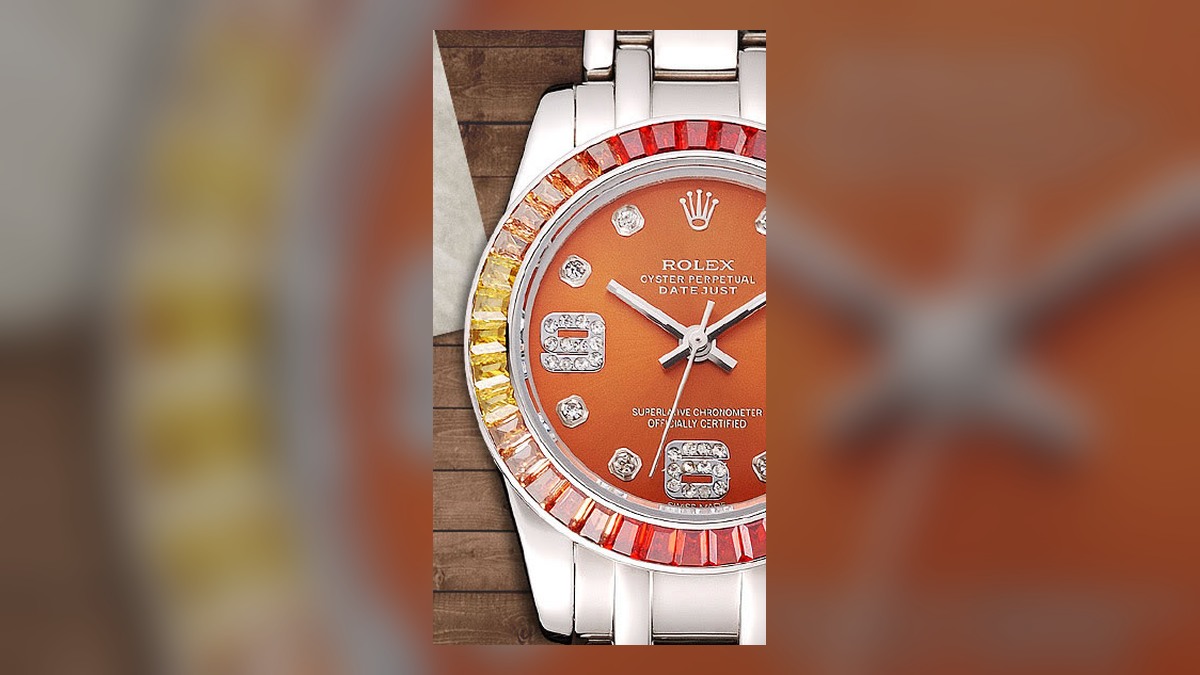
Rolex Datejust Replica Guide
A detailed Datejust 36/41 guide focused on case proportion, date and Cyclops alignment, bezel geometry, Jubilee/Oyster bracelets, movement choices and material claims.
A detailed Datejust 36/41 guide focused on case proportion, date and Cyclops alignment, bezel geometry, Jubilee/Oyster bracelets, movement choices and material claims.
The Datejust and Day-Date share recognizable Rolex design cues, but they are different watch families. A deep replica comparison starts by separating their functions, bracelets, materials and proportions.
Editorial review: . Genuine specifications were checked against Rolex and movement-maker documentation where available.
The current Rolex Datejust 36 and Datejust 41 use calibre 3235, show the date at 3 o’clock under a Cyclops lens and are rated by Rolex to 100 metres. The collection can use Oyster or Jubilee bracelets depending on the reference, and the Jubilee bracelet was originally created for the Datejust in 1945. Unlike the current Day-Date, Datejust configurations include Oystersteel and Rolesor combinations rather than being limited to precious-metal cases.
Official baselines: Rolex Datejust 36, Rolex Datejust 41, and Rolex Jubilee bracelet history.
A seller can build a Datejust-style watch from a familiar set of ingredients—fluted-looking bezel, Jubilee-style bracelet and Cyclops—but the result may not correspond closely to any one genuine configuration. The useful comparison is therefore reference-specific: case size, bezel type, bracelet, dial, material and movement should make sense together.

| Reference point | Datejust 36 | Datejust 41 | Replica check |
|---|---|---|---|
| Diameter | 36 mm | 41 mm | Ask for measured diameter and thickness. |
| Current genuine calibre | 3235 | 3235 | Movement décor is not proof of calibre architecture. |
| Calendar | Date at 3 with Cyclops lens | Inspect numeral centring, lens alignment and quick-set behaviour. | |
| Water resistance | 100 m genuine Rolex specification | Replica needs its own pressure-test evidence. | |
| Bracelet options | Oyster and/or Jubilee depending on reference | Check whether the bracelet/bezel combination matches the claimed reference. | |
A 41 mm watch does not simply scale a 36 mm dial upward. Marker length, minute track, bezel width and empty dial space all change the perceived balance. A replica can therefore have the “correct” diameter but still look wrong because the dial furniture was borrowed from a different size.
The Datejust has only one calendar aperture, so mistakes around the date receive more attention. Judge the system in layers.
Check single and double digits. A date wheel can look acceptable on “8” but reveal lateral spacing problems on “28.”
The cut-out itself should be level and proportionate. A well-printed date wheel cannot compensate for an aperture that is too tall, too narrow or slightly rotated.
Look at the centre of the lens relative to the aperture beneath it. Strong magnification does not fix an off-centre lens.
A front-angle photograph can reveal whether the crystal sits unusually high or whether the inner wall/rehaut looks too deep. These factors change how the date appears even when the magnifier itself is reasonable.
Rolex’s current Datejust specifications describe a scratch-resistant sapphire crystal with a Cyclops lens. A replica seller should not treat “sapphire” as proof that the rest of the crystal geometry matches the genuine watch.
The Datejust appears in multiple bezel styles, so “fluted bezel” is not itself a quality grade. For a fluted-style replica, inspect the regularity and depth of the flutes, the way highlights repeat around the circumference, and the transition into the crystal. Uneven machining often becomes easier to see under soft neutral light than under bright seller spotlights.
A smooth bezel can look simpler but it exposes polishing quality. Wavy reflections, rounded edges or inconsistent surface finish can be easier to notice because there is no fluting to break up the light.
If stones are involved, separate the question of setting quality from the question of stone identity. Alignment, spacing and security can be inspected visually; gemstone type and grade require evidence rather than a product-title claim.
Rolex states that the Jubilee bracelet was created for the Datejust in 1945. Its five-piece visual structure creates many polished edges and articulating surfaces, which means finishing and fit become important on a replica.
The broader three-piece visual structure puts more emphasis on flat brushing, polished side surfaces and clasp construction. Uneven brushing direction or over-rounded edges are common visual clues.
A Datejust-style watch can be attractive even if it combines features differently from Rolex, but a seller claiming reference-level replication should be able to show that case, bezel, dial and bracelet correspond to the reference being named.
Compared with a Day-Date replica, a Datejust-style watch only needs a date display, which makes common date-only movements mechanically easier to integrate.
| Movement | Published functions | Published frequency | Published running time | Relevant Datejust question |
|---|---|---|---|---|
| MIYOTA 8215 | 3 hands + date | 21,600 vph | Approx. 42 h | How well are stem height, date-window position and case thickness integrated? |
| MIYOTA 9015 | 3 hands + date | 28,800 vph | Approx. 42 h | Does the thinner 3.90 mm movement allow a better case profile in this build? |
| “Clone 3235” | No universal independent spec for the marketing phrase | Depends on actual movement | Depends on actual movement | Ask for exact architecture, crown sequence, measured reserve and service information. |
Rolex’s genuine calibre 3235 benchmark is approximately 70 hours of power reserve and a Rolex precision specification of -2/+2 seconds per day after casing. Those are genuine-watch specifications, not numbers a replica automatically inherits because its movement resembles a 3235 externally.
Rolex uses the term Rolesor for combinations of Oystersteel and gold. On a replica, two-tone appearance can be produced in very different ways: plated centre links, coated surfaces, wrapped components or other construction. “Two-tone” describes appearance; it does not tell you the amount or type of gold present.
If material is important, ask for the base metal of case and bracelet, the coating method, which components are treated, and whether the colour is expected to change with abrasion. Avoid absolute promises such as “never fades.”
Bracelet undersides, clasp edges, screw heads and crown contact areas receive repeated friction. Those locations often provide a more realistic view of coating durability than the large polished surface shown in a catalogue image.
Datejust dials vary widely—stick markers, Roman numerals, diamond-set markers, sunray finishes and many colours—but that variety makes reference consistency more important, not less. A replica listing may combine a dial, bezel and bracelet that each exist somewhere in the Datejust universe but not together on the reference being named.
If a seller cites a specific Rolex reference number, compare the whole combination: diameter, material, bezel, bracelet and dial. A fluted bezel with a Jubilee bracelet may be plausible on one reference while a smooth bezel and Oyster bracelet belong to another. The goal is not to punish creative combinations; it is to distinguish a fantasy configuration from a reference-accurate claim.
Sunburst finishing can look dramatic under point lighting and flat in diffuse light. Green, blue and champagne tones can shift substantially with white balance. Ask for more than one lighting condition if dial colour is important. Macro photos should also show marker edges, coronet placement and minute-track spacing rather than only the overall colour.
Actual-unit quality-control photos are useful because many cosmetic problems are unit-specific rather than model-wide. Common checks include a tilted coronet, crooked applied marker, dust under the crystal, a date window that sits high or low, bezel misalignment, uneven end-link gaps and obvious bracelet scratches.
Not every tiny macro imperfection will be visible on the wrist, so QC should be proportional. A one-pixel printing variation at extreme magnification is different from a date that is visibly off-centre at normal viewing distance. The best review process separates functional problems, obvious visual defects and microscope-only imperfections.
| Feature | Datejust | Day-Date |
|---|---|---|
| Calendar | Date at 3 | Full weekday at 12 + date at 3 |
| Current common sizes | Includes 36 and 41 mm among the broader Datejust family | 36 and 40 mm |
| Signature bracelet association | Jubilee strongly associated with Datejust | President created for Day-Date |
| Current genuine material concept | Steel and Rolesor configurations exist | Precious metals only |
| Replica movement complexity | Date-only movement can suit the basic display | Requires both day and date or an added calendar solution |
No. They are distinct models with different dial, bezel and bracelet relationships. Sharing a generic large case can create obvious proportion errors.
No, but Rolex created it specifically for the Datejust in 1945. It remains one of the clearest visual associations with the model.
Functionally, yes: MIYOTA lists the stock 9015 as a three-hand date movement. The important question becomes how well the movement is integrated into the case and date-window geometry.
No. Crystal material, lens shape, lens position and date-window alignment are separate variables.
No. The genuine Rolex rating does not apply to a replica. Ask for a pressure test on the individual watch.